Imagine Playing The Piano With Ease and Freedom
Turn tension into relaxation with this online course based on three universal pillars of effortless technique.
Does This Sound Like You?
❌ Your fingers feel stiff, even when you try to relax them.
❌ The faster you play, the more your hands tighten up
❌ Your hands tire out before you're ready to stop playing.
❌ You know you should relax, but when you do you feel like you'll losing control
❌ Your shoulders creep up and your arms feel locked when you play
❌ You actually have pain in your back, neck or shoulders during or after playing.
I Was Lucky (And Now You Can Be Too)
When I was just 10 years old, I had an amazing piano teacher who was absolutely fantastic at teaching effortless technique.
She taught me most of what still shapes my technique today. But one of the things that made the biggest impression on me was that she never allowed me to say that playing the piano was hard.
And that changed the way I approached the instrument.
Instead of believing that difficult passages were supposed to feel difficult, I learned to look for ways to make them feel easier.
I learned that playing the piano didn't have to be a constant struggle. That you didn't need to force your fingers through difficult passages. And that with the right approach, you could learn to play with much more freedom and ease.
These lessons became such a natural part of how I played that I didn't fully appreciate how valuable they were until much later.
Because I realised something: not everyone had been that lucky.
Many pianists spend years trying to overcome tension, struggling with difficult passages, and assuming that playing the piano simply has to feel hard.
And too often, you're told to practise more, try harder, or just relax — without being shown what to do differently.
I want to change that.
I want you to have access to the same principles that shaped my technique, regardless of whether you learned them as a child or have been playing for decades.
Because I wasn't a professional pianist when I learned these things. I was just 10 years old.
You don't need to be a professional pianist to learn to play with more ease, either.
That's why I created Effortless Technique: to help you understand how to move more efficiently, reduce unnecessary tension, and discover how much easier playing the piano can feel when you approach it differently.
The Three Pillars of Effortless Piano Technique
What if playing the piano could feel easier than you ever imagined?
Effortless technique isn't about forcing yourself to relax or spending years trying to perfect your fingers. It's about understanding a few fundamental principles that can transform the way you approach the piano.
These are the three pillars that shaped my own technique and that I'll teach you to apply to your own playing.
01. Whole-Body Playing
Discover that your fingers were never meant to work alone.
One of the most fundamental aspects of piano technique is something many pianists are never properly taught: how to involve their whole body(!) in playing.
Your fingers can't do all the heavy lifting. It's like trying to drive a car only in first gear.You're making it so much harder than it needs to be!
Once you understand this principle, you'll have a completely different way of approaching piano playing.
02. Efficiency
Why work harder when you can achieve more with less effort?
Many pianists respond to difficult passages by trying harder, pushing their fingers more forcefully or repeating the same movements over and over.
But what if the answer isn't more effort, but a better way of moving?
You'll learn how to recognise unnecessary effort, make your movements more efficient and discover easier ways to approach difficult passages.
Instead of constantly fighting your own body, you'll learn to work with it, developing greater freedom yet control, without making playing harder than it needs to be.
03. Musical Understanding
Discover the surprising connection between musicality and technique.
This is the most overlooked pillar of effortless technique.
We tend to think of technique as something physical: what our fingers, hands and arms do. But how you understand and approach the music has one of the biggest influences on how you play it.
When you understand the direction of a phrase, how the music is shaped and where it's going, your brain can actually organise the moment better! Rather than treating every note as an isolated technical challenge, you can organise your movements around the music itself. It's like solving a puzzle: solve what the music is telling you, and you'll help solve the technical challenge.
Because effortless technique isn't just about learning to move differently. It's also about learning to think about the music differently.
Bring the Three Pillars Together: Whole-Body Playing. Efficiency. Musical Intention.
Whole-body playing. Efficiency. Musical Intention.
These three principles work together to help you approach the piano in a completely different way.
You can learn a more natural, efficient approach to technique — one that helps you play with greater ease, freedom and confidence.
WHAT'S INSIDE Effortless Technique:
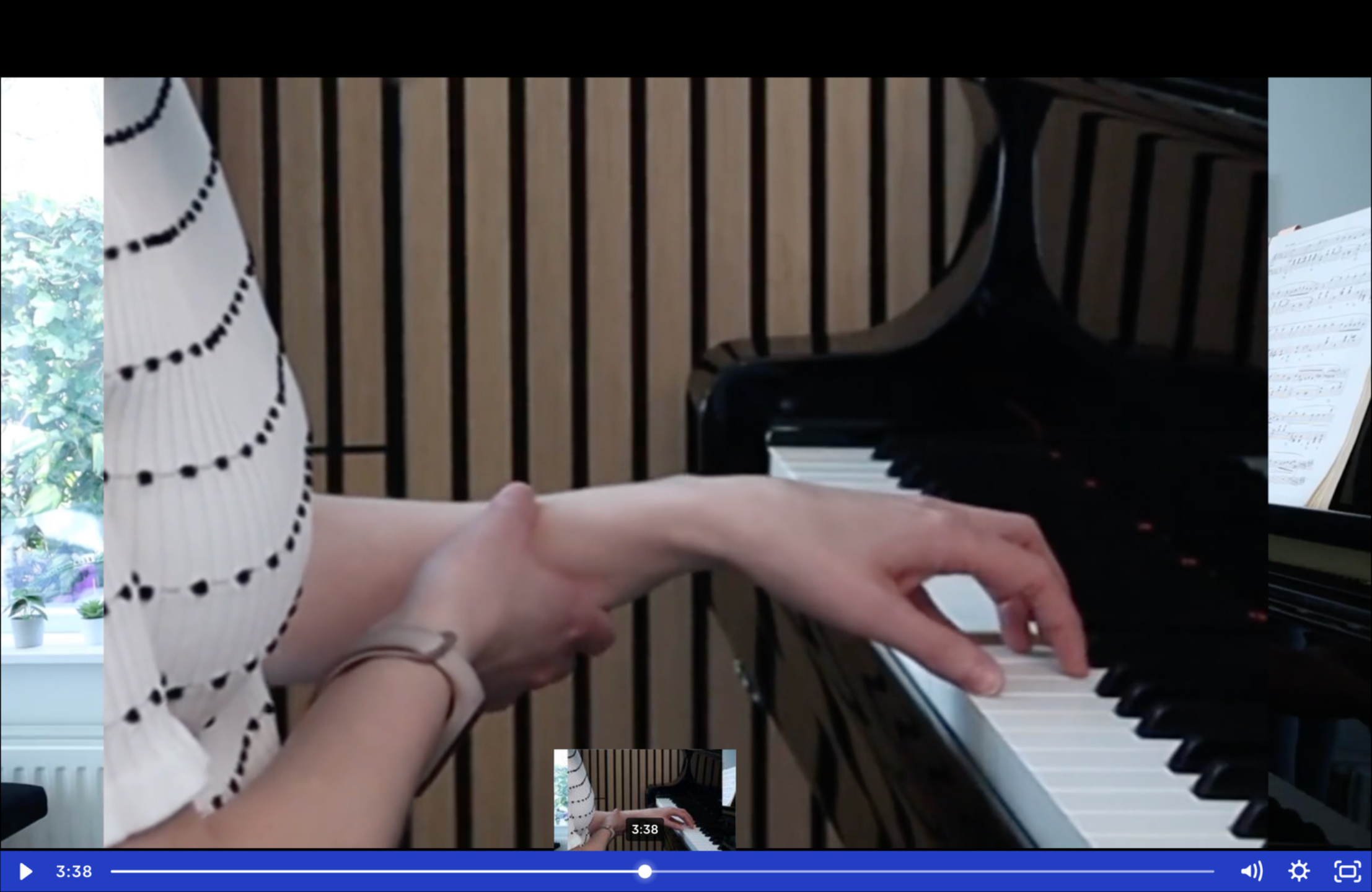
MODULE #1 WHOLE BODY PLAYING
We focus on breaking the habit of isolating the fingers and start building a system that involves your whole body, beginning with the wrist.
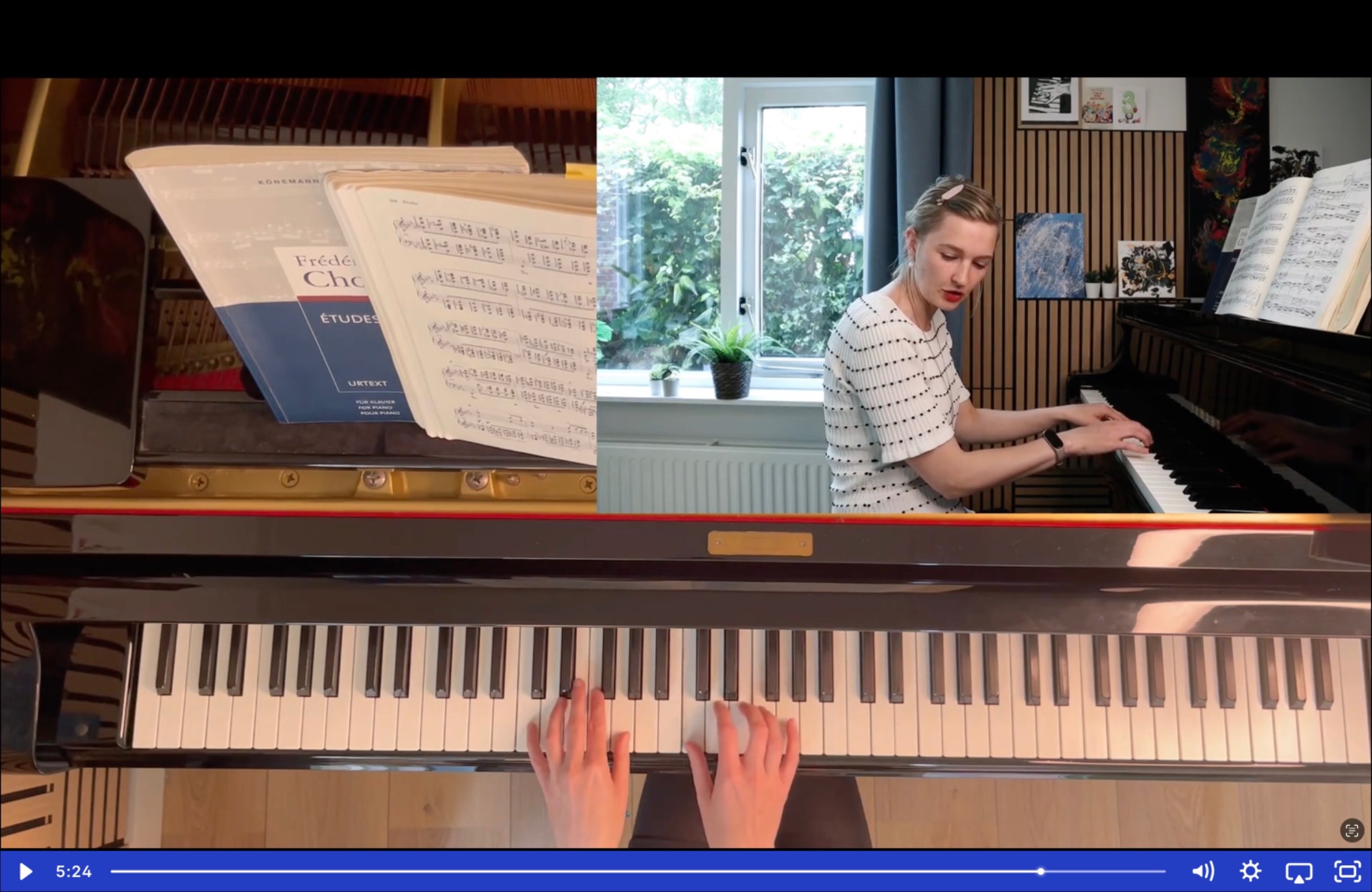
MODULE #2 EFFICIENCY
A large part of effortless technique is knowing where to use effort and where NOT to.
We focus on removing unnecessary tension, staying close to the keys, and discovering natural movements.
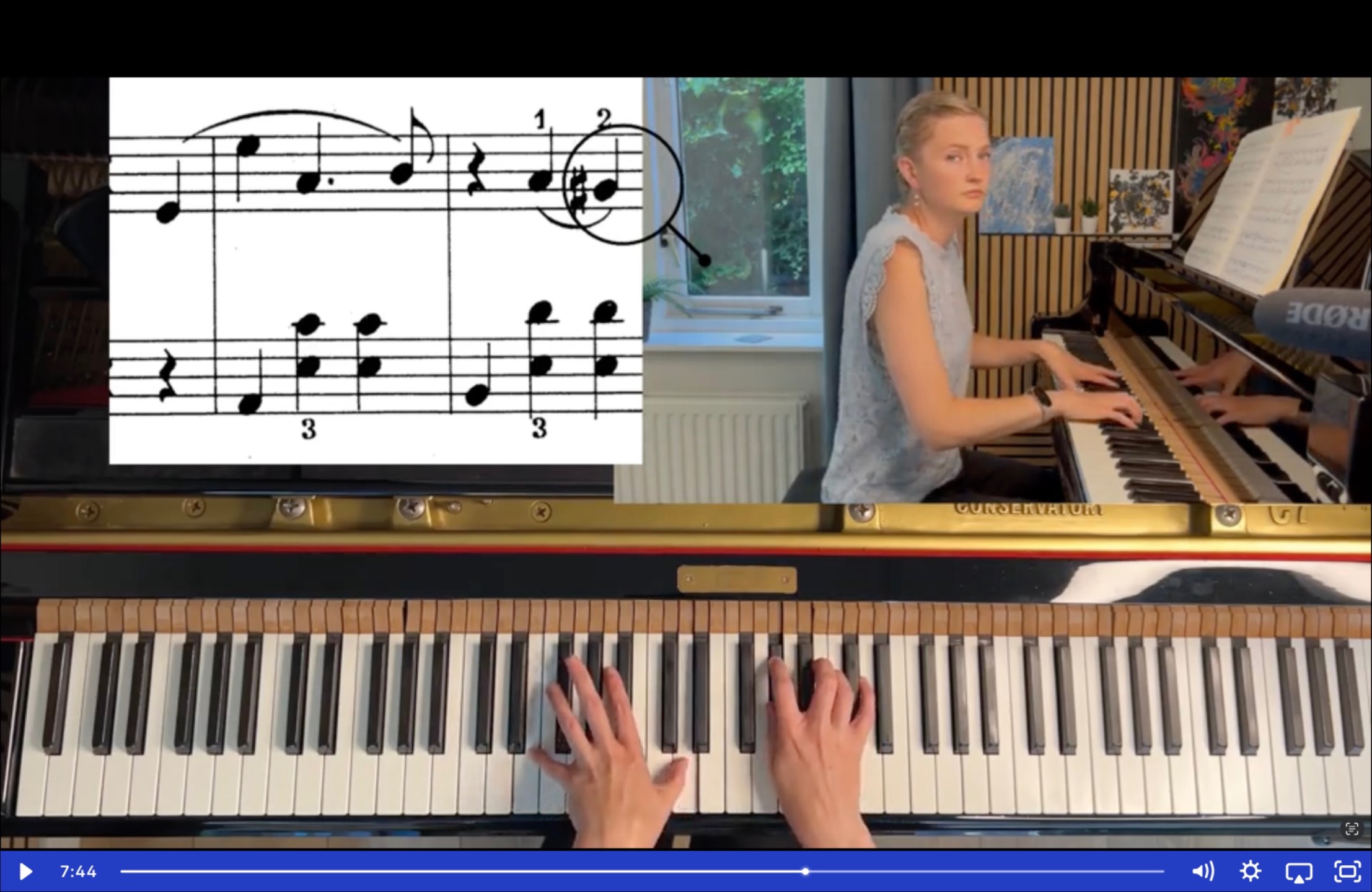
MODULE #3 MUSICAL INTENTION
The secret to effortless technique is understanding a passage musically.
In this module, we explore how to use musical intention to instantly get more out of your technique.
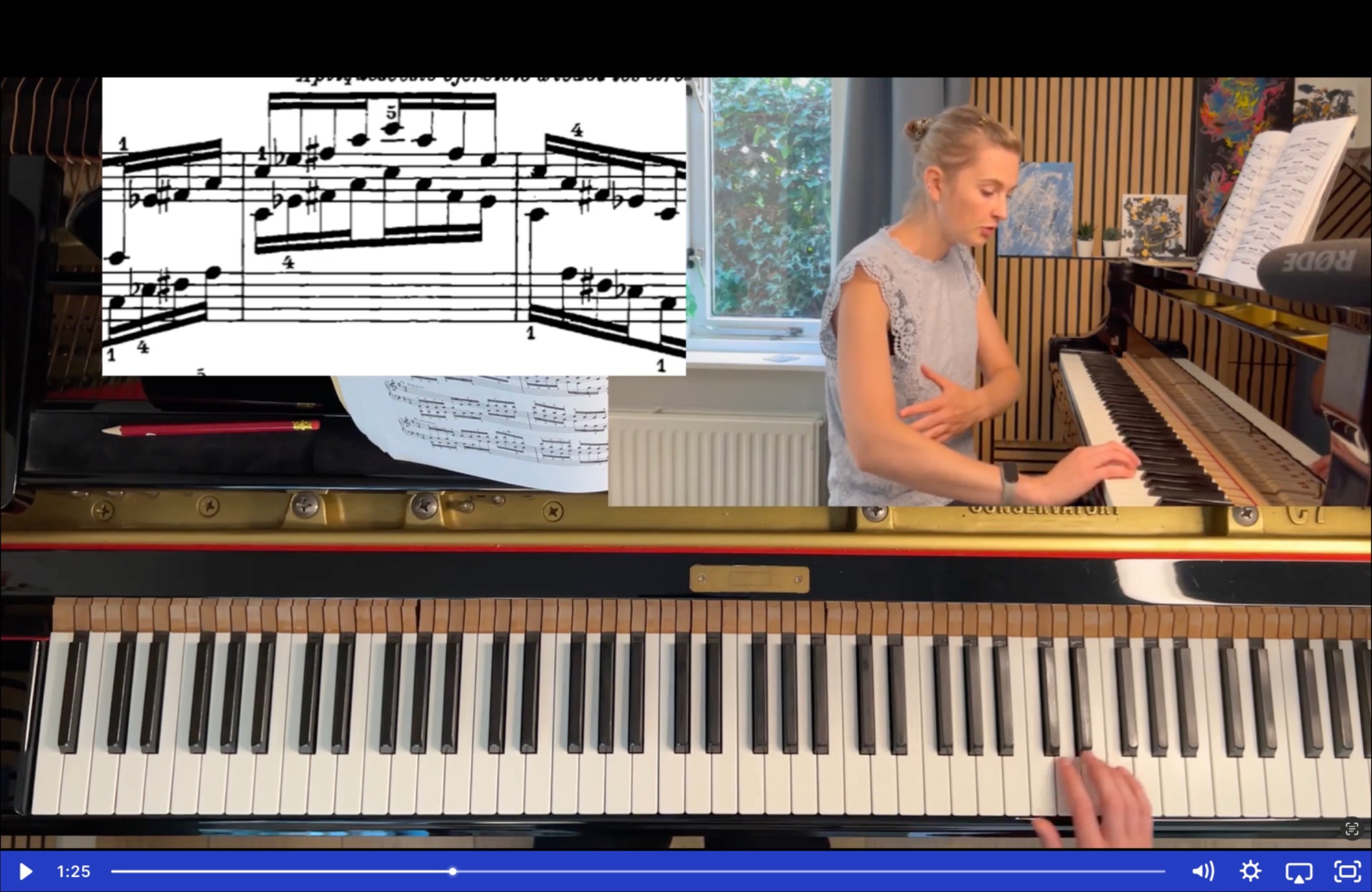
MODULE #4 ALL STANDARD PIANO TECHNIQUE
We go through all standard piano techniques (scales, arpeggios, octaves etc.) by utilising all three pillars.

MODULE #5 STRATEGY
All great sports need strategy and piano is no different. Discover how to plan your playing including 'rest points' to make sure your hands stay relaxed.

COMMUNITY & GROUP LESSONS
Access to a private community and regular group lessons where you can ask questions and discuss how the ideas apply to your own practice.
INTRODUCING:
Elvire Boelee
I studied classical piano at the Prince Claus Conservatory in Groningen the Netherlands. I've studied under Steinway Artists Nata Tsvereli & Paul Komen and I've also studied with Bart van de Roer.
I've taken masterclasses from world-renown master pianists like Liszt competition winner Igor Roma, Théodore Paraskivesco and Geoffrey Madge.
I've won competitions starting at 11 years old. I've been on radio and tv and I've performed all over the country
I’ve been teaching piano for more than 18 years, performing for over 11, and have been running our YouTube channel with my partner Dimitar Dimitrov for several years with lots of pleasure.
With all that experience, I never expected that the video that would go viral would be about a technique I learned when I was 10 years old, long before my career started.
But more than 200,000 views told me:
this is what you need.
This is what nobody’s been telling you.
And I know you can learn this.
Because you don't have to be advanced or experienced.
You just need somebody to show you the right approach to technique.
Effortless Technique
00
DAYS
00
HOURS
00
MINS
00
SECS
GET LIFETIME ACCESS NOW TO MODULE 1- + ALL FUTURE MODULES
Get it NOW for €100*
*Will soon be €150
BUY NOW30-DAY MONEY-BACK GUARANTEE
If you aren’t completely satisfied with the course, let me know within the first 30-days for a full refund. No questions asked.